

Struggling to get your research proposal approved? Here’s an expert research proposal to help in 5 steps to boost acceptance and impress your academic reviewers.
Introduction
Writing a research proposal can feel overwhelming—especially for early-stage PhD scholars and postgraduate students. You might wonder how to structure your ideas, how deep your literature review should go, or what methodology to choose. If you’re stuck, you’re not alone.
Getting research proposal help at the right time can be the difference between a smooth approval and months of frustrating rework. This blog will guide you through five clear, actionable steps to craft a winning research proposal—and fast.
Whether you’re working solo or with guidance, platforms like PhD Wise offer expert support, templates, and editing to help scholars move confidently toward approval.
Step 1: Understand the Purpose and Structure of a Research Proposal
A strong proposal isn’t just paperwork—it’s a blueprint for your entire PhD journey. Before writing, make sure you understand why the proposal is important and what reviewers expect.
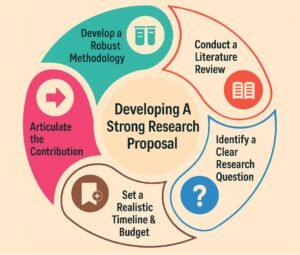
Key components of a winning research proposal:
- Title: Clear, concise, and research-focused
- Introduction: Outlines the problem and purpose
- Literature Review: Shows familiarity with existing research
- Research Questions/Objectives: Clearly stated and achievable
- Methodology: Explains how you’ll conduct the study
- Timeline and Plan: Realistic and detailed
- References: Academic and properly formatted
📌 Tip: Create a checklist or use a proposal structure guide from a trusted academic source like Springer’s writing resources.
Step 2: Choose a Strong, Researchable Topic
Your topic is your proposal’s foundation. A vague or overly broad topic often leads to rejection. Ensure it is:
- Specific and focused
- Relevant to your field
- Feasible in scope and time
How to choose the right topic:
- Review current trends in your discipline
- Read recently published journals
- Consult with mentors or supervisors
- Use PhD Wise topic selection support if you’re unsure
At PhD Wise, we help students validate and refine research ideas based on academic gaps, availability of data, and journal acceptability—ensuring your proposal starts strong.
Step 3: Justify Your Research Proposal with a Strong Literature Review
A common mistake is writing a summary of sources rather than a critical review. Your literature section should build an argument for why your research is needed.
Tips for a standout literature review:
- Identify gaps in current research
- Highlight limitations of previous studies
- Use recent, peer-reviewed journals
- Group studies thematically rather than listing chronologically
📌 Need help analyzing your literature? The experts at PhD Wise offer PhD research proposal help, including annotated literature review feedback.
Step 4: Clarify Your Methodology and Research Design
One of the most important parts of your proposal is the methodology—yet it’s also one of the most misunderstood.
What your methodology should cover:
- Type of research (qualitative, quantitative, mixed)
- Sampling techniques and data collection methods
- Instruments and tools
- Data analysis plan
Use this section to convince reviewers that your research is doable, ethical, and will produce valid results.
✅ Bonus: PhD Wise provides detailed research methodology advice and proofreading to align with academic guidelines.
Step 5: Edit, Format, and Get Expert Feedback
Even strong proposals get rejected due to poor formatting, grammar issues, or unclear arguments. Before submission, ensure your proposal:
- Meets university formatting guidelines
- Uses consistent referencing style (APA, MLA, etc.)
- Has a clear, logical flow
- Is free of spelling and punctuation errors
📌 Expert Tip: Use tools like Grammarly and Quillbot to polish language—but always get human feedback from experienced academic mentors.
At PhD Wise, we’ve helped hundreds of students turn rough drafts into well-structured, compelling proposals. Our academic editors ensure clarity, coherence, and compliance with university standards—so your proposal sails through review.
Common Mistakes to Avoid
Avoid these pitfalls when writing your proposal:
- Copy-pasting sections from sample proposals
- Ignoring feedback from your guide or committee
- Choosing a method you’re unfamiliar with
- Citing outdated or irrelevant sources
- Submitting without external review
Remember, strong academic proposal guidance ensures fewer revisions and faster progress in your research.
Conclusion
Writing a strong research proposal doesn’t have to be stressful. With the right structure, topic clarity, and expert input, you can avoid common pitfalls and impress your review committee.
If you’re looking for personalized research proposal help, expert editing, or structured templates, PhD Wise is here to support your journey—every step of the way.
📣 Need tailored research proposal help? Get expert feedback from PhD Wise today and move one step closer to PhD success.
What’s your biggest challenge when writing your research proposal?
Drop a comment below or share your experience—we’d love to hear from you!